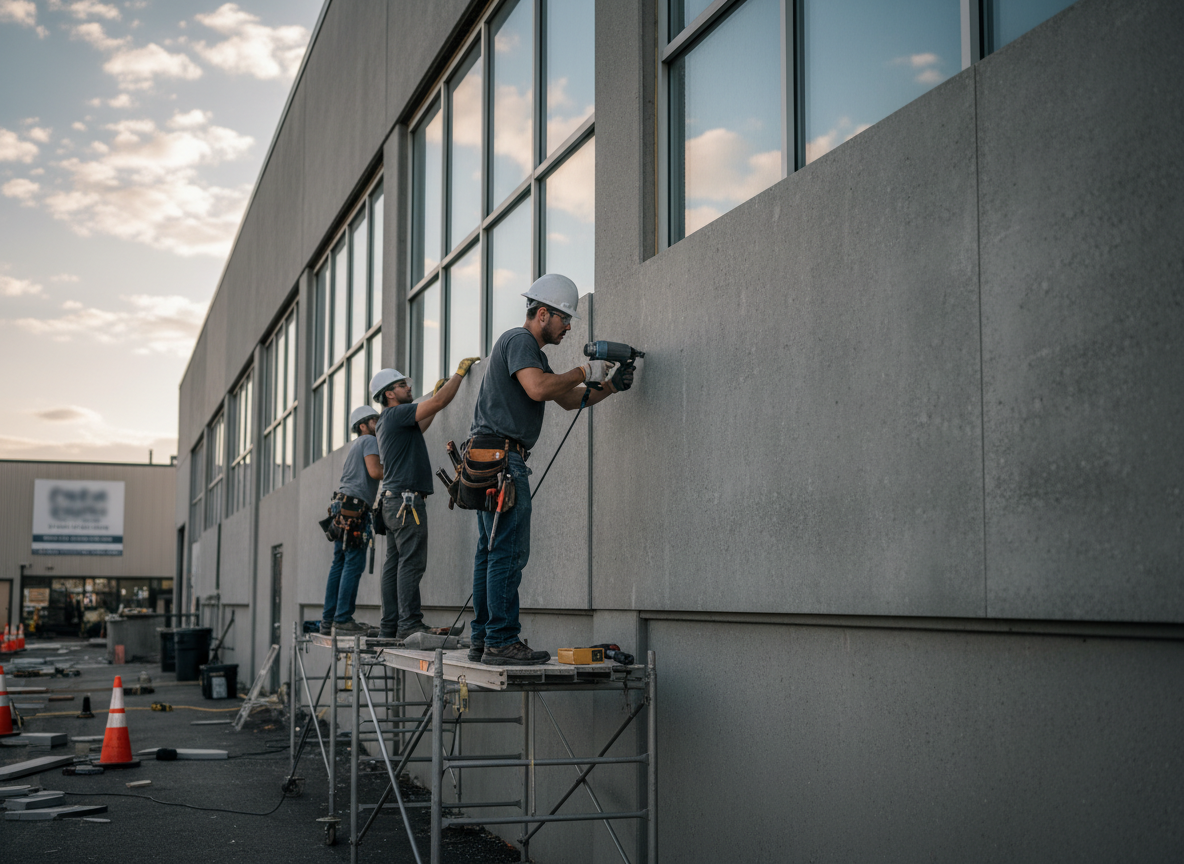
Commercial buildings in Union and nearby Ryle often feature steel-frame or masonry structures from the 1980s onward that sit on clay-heavy Boone County soil. These conditions trap moisture against lower courses during humid subtropical summers, so proper rainscreen detailing and corrosion-resistant fasteners become essential. Installers must also account for thermal expansion on long runs when temperatures swing even in mild winters. Skipping weep holes or using incompatible insulation leads to callbacks once condensation builds behind panels.
Jobs near Union Community Park or along routes to Florence and Burlington frequently involve matching existing architectural panels on retail or light-industrial sites. Wind-driven rain from the south and occasional freeze-thaw cycles in winter push crews to use closed-cell foam backers and sealed vertical joints rather than open rainscreen gaps. Edge cases include retrofitting around rooftop HVAC curbs where vibration loosens fasteners over time. Material choice shifts toward 24-gauge metal or fiber cement when budgets allow, because vinyl distorts faster under commercial HVAC exhaust.
Code notes in Boone County require commercial siding to meet wind-load ratings for the region and maintain fire separation on multi-tenant walls. Crews check for hidden termite damage or prior water intrusion along slab edges before starting, especially on properties that back up to drainage swales common around Union. Owner-operated teams keep schedules flexible because 24/7 availability at 9039 US-42 lets them respond to storm damage without waiting on larger crews from Florence.
Seasonal Considerations
Work peaks after spring storms when humidity spikes and again in fall before mild winter sets in. Crews schedule around school traffic near Ryle and avoid midday heat on dark metal panels that expand quickly.
Technician insight
In Union, the thing that catches most people out with commercial siding contractors is how clay soil and poor lot grading around older retail strips near Ryle trap water against the base of the wall, so any new install has to include a proper weep system or the panels start telegraphing moisture within two seasons.
How it works
- 1
Site Assessment
Measure elevations, check substrate condition and note drainage patterns around the Union building.
- 2
Material Selection
Review wind-load needs and humidity exposure then select panels suited to Boone County commercial stock.
- 3
Preparation and Removal
Remove damaged sections, address rot at base plates and install weather barriers before new work begins.
- 4
Installation and Sealing
Hang panels with proper overlaps, seal all penetrations and verify expansion joints on long commercial runs.
- 5
Final Walkthrough
Inspect for gaps, confirm drainage paths and document the completed commercial siding for the owner.
Pricing
Pricing depends on building height, material type and extent of substrate repairs. Contact for site-specific quote.