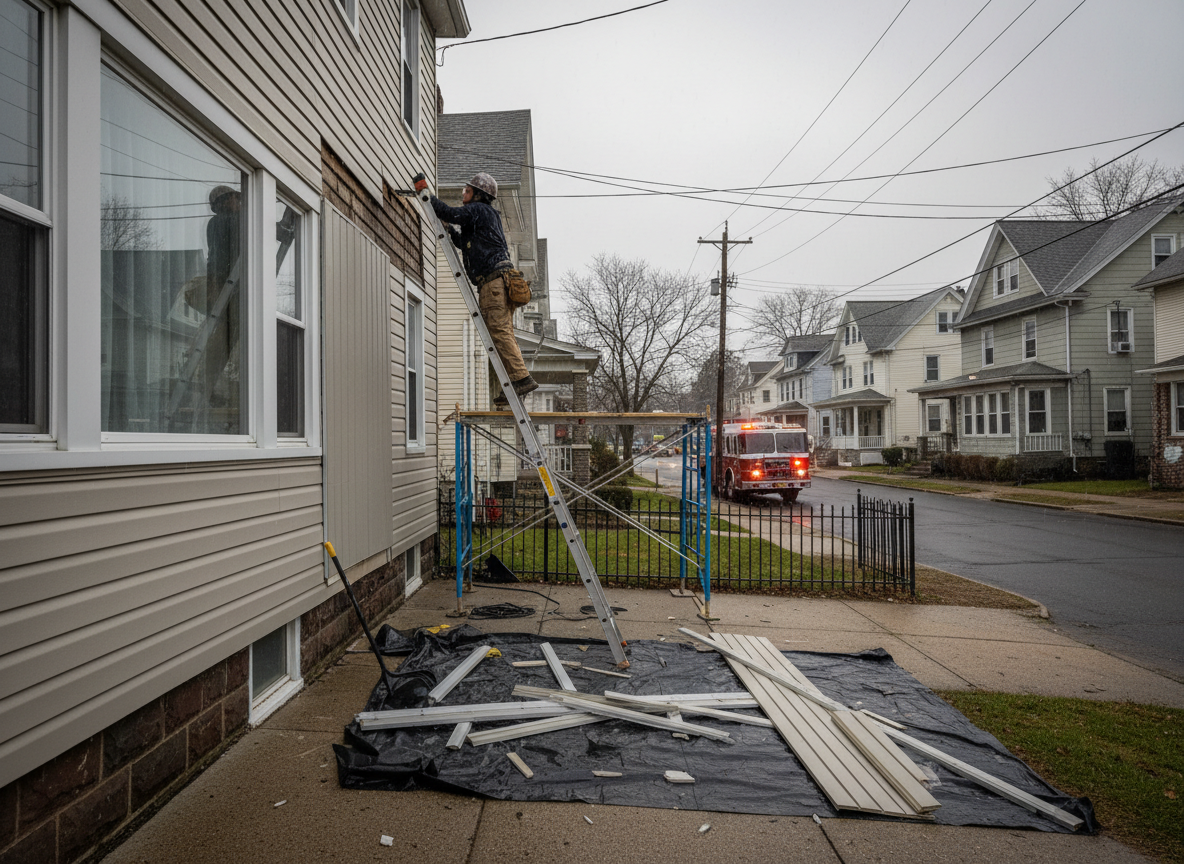
Union and Ryle neighborhoods feature mostly 1990s to 2010s frame houses with vinyl or fiber cement siding on crawlspaces or slabs. Sudden thunderstorms common in Boone County’s humid subtropical climate drive wind-driven rain under laps and around windows, especially on west-facing walls that take the brunt of spring and summer storms. Emergency calls often involve detached pieces flapping in wind or water already tracking into OSB sheathing behind the siding. We carry matching panels and coil stock on the truck so we can secure the envelope the same night rather than leaving homes exposed overnight.
Mild winters here still produce freeze-thaw cycles that push moisture deeper into any compromised joints. Homes along US-42 and side streets in Ryle frequently show failed J-channel or missing step flashing where rooflines meet siding, turning a small wind event into interior drywall damage within hours. Our crews know the typical fastener patterns and housewrap details used by local builders, letting us open only the damaged sections instead of tearing entire walls. We also watch for soil movement on the slight slopes common in Boone County that can shift foundations and pull siding out of alignment.
Code requirements in Boone County call for proper drainage planes and weep holes on any replacement work. During emergencies we document existing conditions with photos before covering, then return for permanent fixes once weather stabilizes. Fiber cement repairs demand pre-drilled fasteners and color-matched touch-up to avoid telegraphing patches; vinyl needs exact profile matches to prevent oil-canning on sunny days. Skipping these steps leads to callbacks when humidity spikes again.
Access on narrow driveways and shared lots in Union subdivisions often requires staging from the street or using extension ladders rather than lifts. We carry tarps, furring strips and temporary fasteners sized for the local stock of 4-inch and 6-inch reveals so we can button up any siding type without waiting for daylight deliveries.
Technician insight
In Union the thing that catches most people out with emergency siding is how the mild winters still let wind-driven rain work behind vinyl on 2000s Ryle homes when step flashing at roof intersections was never properly integrated with the housewrap. Homeowners often think a flapping corner is cosmetic until water reaches the bottom plate two storms later.
Wind-Driven Leak on West Wall
A sudden July storm tore several vinyl panels loose on a two-story home near Union Community Park. We found missing flashing where the siding met the garage roof and water already at the rim board. We secured the wall overnight with furring and tarps, then returned to install new flashing, matching panels, and fresh housewrap tape. The interior stayed dry and the repair blended with the existing elevation.
How it works
- 1
Initial Call and Dispatch
We answer 24/7, confirm the address in Union or Ryle, and roll a truck with common profiles and securing materials within the hour.
- 2
On-Site Assessment
We inspect from the ground and attic, note water intrusion paths, photograph damage, and explain immediate safety steps before any work begins.
- 3
Temporary Securing
Loose panels are removed or fastened, seams are flashed with peel-and-stick, and tarps are anchored to prevent further wind or rain entry.
- 4
Permanent Repair Plan
We return with matching materials, correct flashing details, and complete the fix, then walk the homeowner through maintenance points for the repaired section.
Pricing
Upfront quotes after inspection; cost driven by extent of damage, material type, and height or access difficulty.