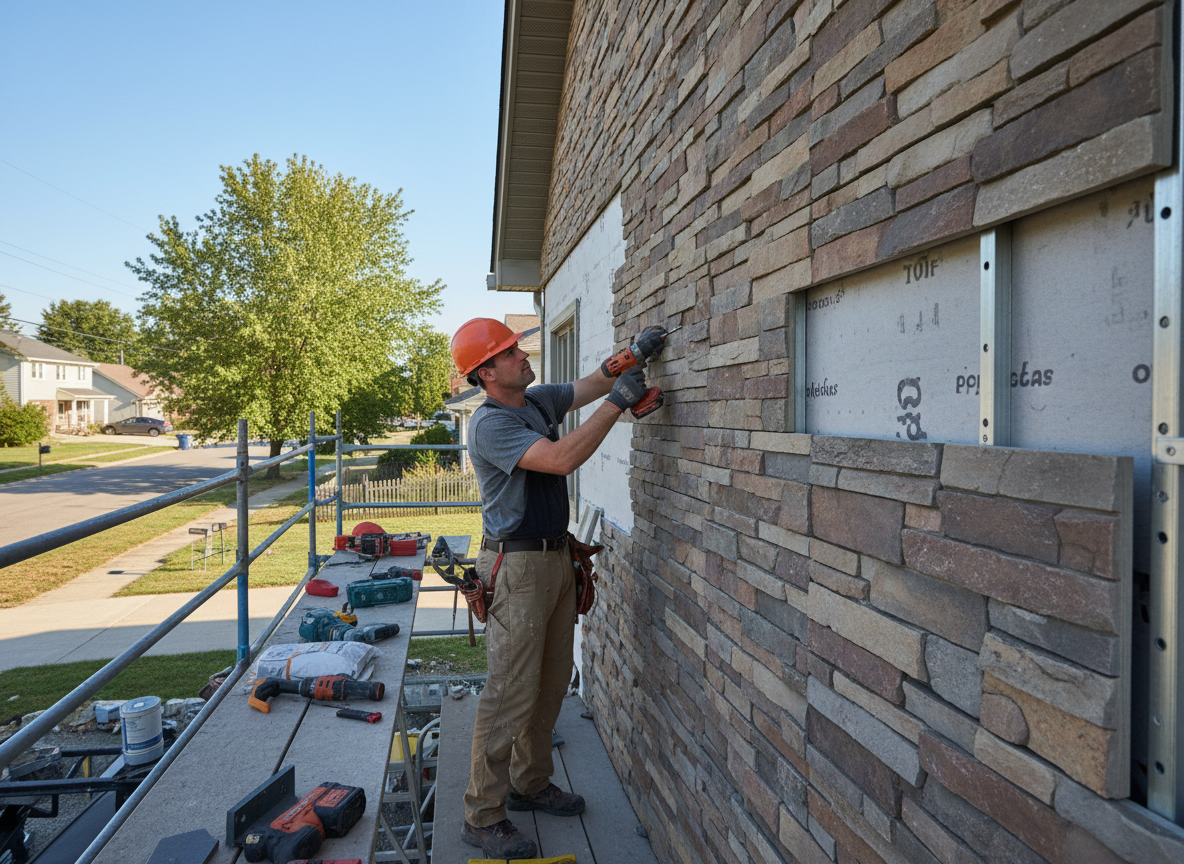
Fake rock siding, also called cultured stone, uses lightweight concrete or polyurethane panels molded to mimic natural stone. In Union and nearby Ryle neighborhoods, these panels must resist the area's humid subtropical climate with its frequent summer humidity and occasional winter freeze-thaw cycles. Proper installation requires a weather-resistant barrier and ventilation gap behind the panels to prevent moisture trapping against older wood-framed homes common throughout Boone County. Skipping this step often leads to rot along the foundation line where clay-heavy soil holds water after rain.
Edge cases appear regularly on homes near Union Community Park and along US-42. Steep lots in Florence and Burlington create drainage issues that push water toward siding joints. Installers must angle starter strips and use corrosion-resistant fasteners rated for the local humidity. Building codes in Boone County require specific clearances above grade to avoid soil contact, and inspectors check for these details on every permit job. Homeowners in Union sometimes attempt DIY repairs using big-box panels that lack the density needed for our mild but damp winters.
Local Weather and Material Choices
Fake rock siding performs best when the product has a minimum compressive strength suited to freeze-thaw exposure. Panels installed without integrated weep holes can trap condensation during the transition from cool nights to humid days. Flux Mender selects brands with proven performance in similar Kentucky counties and always verifies the manufacturer's installation instructions match Boone County soil and drainage realities.
Common Installation Pitfalls
Many Union homeowners underestimate the weight load on older sheathing. Adding fake rock over existing vinyl without checking for underlying damage creates future callbacks. Proper flashing at windows and doors prevents water intrusion that shows up first at the bottom corners of openings after heavy spring rains.
Technician insight
In Union, the thing that catches most people out with fake rock siding is the clay soil along US-42 that holds water against the foundation during our mild winters. Homeowners near Ryle and Union Community Park often skip the required clearance and weep-hole details, then wonder why panels shift after a few seasons of humidity.
Ryle Home Foundation Line Repair
Water had wicked up behind the lower course of fake rock on a Union home near the park. We found missing flashing and direct soil contact from the clay-heavy yard. We removed the bottom panels, added a proper drainage plane and graded the ground away from the wall, then reinstalled new panels with correct clearance. The homeowner now has dry sheathing and no recurring moisture issues.
How it works
- 1
Site Assessment
Inspect existing siding, sheathing, and drainage around the Union home, noting soil conditions and exposure to prevailing winds.
- 2
Material Selection
Choose panels and trim rated for humid subtropical climates, confirming color and texture match the surrounding Boone County homes.
- 3
Prep and Barrier Installation
Remove damaged sections, apply moisture barrier and furring strips to create airflow, then seal all penetrations.
- 4
Panel Installation
Set starter course level, install panels with proper overlaps, and finish edges with coordinated trim at windows and corners.
- 5
Final Inspection
Check for gaps, verify drainage paths, and clean the site before walkthrough with the homeowner.
Pricing
Pricing varies by square footage, home access, and whether existing siding must be removed; Flux Mender provides upfront quotes after site visit.